After being busy with graduation and job hunting, followed by three years of the pandemic, it has been a long time since I attended a major international conference. This time, I saw that OCF was going to have a booth at FOSDEM and would partially subsidize travel expenses. After some thought, I decided to attend this major European open-source conference.
Contents
About FOSDEM
The full name of FOSDEM is Free and Open source Software Developers’ European Meeting, which, as the name implies, is a European open-source and free software conference. It has a long history, having been held since 2000. For the past two years (2021/2022), it moved to a fully online format due to the pandemic, but returned to an in-person event this year (2023).
Having participated this year, I feel that FOSDEM is overall very similar to COSCUP. However, the richness and diversity of the session tracks still surpass COSCUP, as it gathers open-source and free software enthusiasts from all over Europe.

FOSDEM Sessions
The format of FOSDEM's sessions is similar to COSCUP. Each Developer Room (referred to as a "dev room") usually has a specific theme, and attendees can choose a theme they like and stay all day, or hop between different dev rooms to listen to various topics.
This time, I mainly attended the following dev rooms:
Containers
The Containers dev room is usually packed to capacity, so I watched the livestream from the booth. Among the sessions, I heard the one from which I learned the most during the entire FOSDEM: 7 years of cgroup v2: the future of Linux resource control. As the title suggests, this session focused on cgroup v2. The speaker was Chris Down, who works at Meta and is one of the contributors to cgroup v2. He shared how they used cgroup v2 to control memory for various services to achieve better utilization—and even improve performance in some cases—during the pandemic when they couldn't purchase more memory. The slides also provided many references to technical details and analyses, which are worth reading if you are interested.
All FOSDEM talks are recorded, and I highly recommend everyone watch this session.
Another session in the Containers room Cluster API: Operating Kubernetes with Kubernetes 也是聽了蠻有興趣的議程。 Cluster API 是 Kubernetes 中的一個 sub-project,目的是要提供給使用者一個 declerative 的方式去管理整個 Kubernetes Cluster 的生命週期,簡單來說就是利用 Kubernetes 來管理其他 Kubernetes Cluster。由於最近 OpenStack Magnum 有計劃切換到使用這個專案進行 Kubernetes Cluser 的管理,近期會花一點時間稍微研究一下這個專案。
Kernel
Kernel room 不知道為什麼大半議程都被 eBPF 相關的講題佔據,但是有此可見 eBPF 在最近是非常火熱的技術。
These are the three eBPF sessions I attended. "meta netdevices" mainly covers how they achieved network performance in Kubernetes Pods nearly equal to that of the host, specifically by replacing veth with eBPF-developed meta netdevices to reach higher performance.
"Optimizing BPF hashmap and friends" focuses on comparing the performance of various eBPF hash functions, while "eBPF loader deep dive" introduces the architecture of eBPF programs. If you are interested in the low-level mechanics of eBPF, these two sessions are worth a listen.
Software Defined Storage
In the SDS dev room, I attended Dynamic load change in SDS systems this session. It mainly discusses how to achieve more consistent read performance across all OSDs in a cluster by adjusting the primary OSD positions in Ceph. Since primary OSD distribution tends to be more uniform in large clusters, this technique is more effective in smaller clusters. This feature will be released in the next Ceph version (Reef). Users managing small Ceph clusters should check out how it's implemented.
Virtualization and IaaS
For Virtualization and IaaS, I wasn't there primarily for the sessions, but rather to chat with the speakers. The session I did attend was given by Thierry Carrez, General Manager of the OpenInfra Foundation. Is OpenStack still needed in 2023?。
Actually, this topic was quite interesting. Thierry used data to show that OpenStack is still being actively developed and maintained, despite the common perception that it's a "dead" project. His explanation is that OpenStack has become a fundamental part of the infrastructure. Most users don't interact with the infrastructure directly; instead, they interact with higher-level layers like Kubernetes. Consequently, people assume the project is no longer necessary, when in fact, it's just that the project is no longer relevant to most people. I personally agree with this perspective. OpenStack still has its market, even if it's irrelevant to most people. After all, if the project were truly obsolete, I wouldn't be able to make a living through OpenStack today.
Summary
FOSDEM has so many sessions that it's impossible to attend every single one in person. However, every session is recorded, so you can catch up through the videos and reach out to the speakers using the contact information in their slides. If you're interested in seeing what other sessions FOSDEM has to offer, you can check them outFull schedule, and the recordings are all available atThis website
OpenInfra Gathering
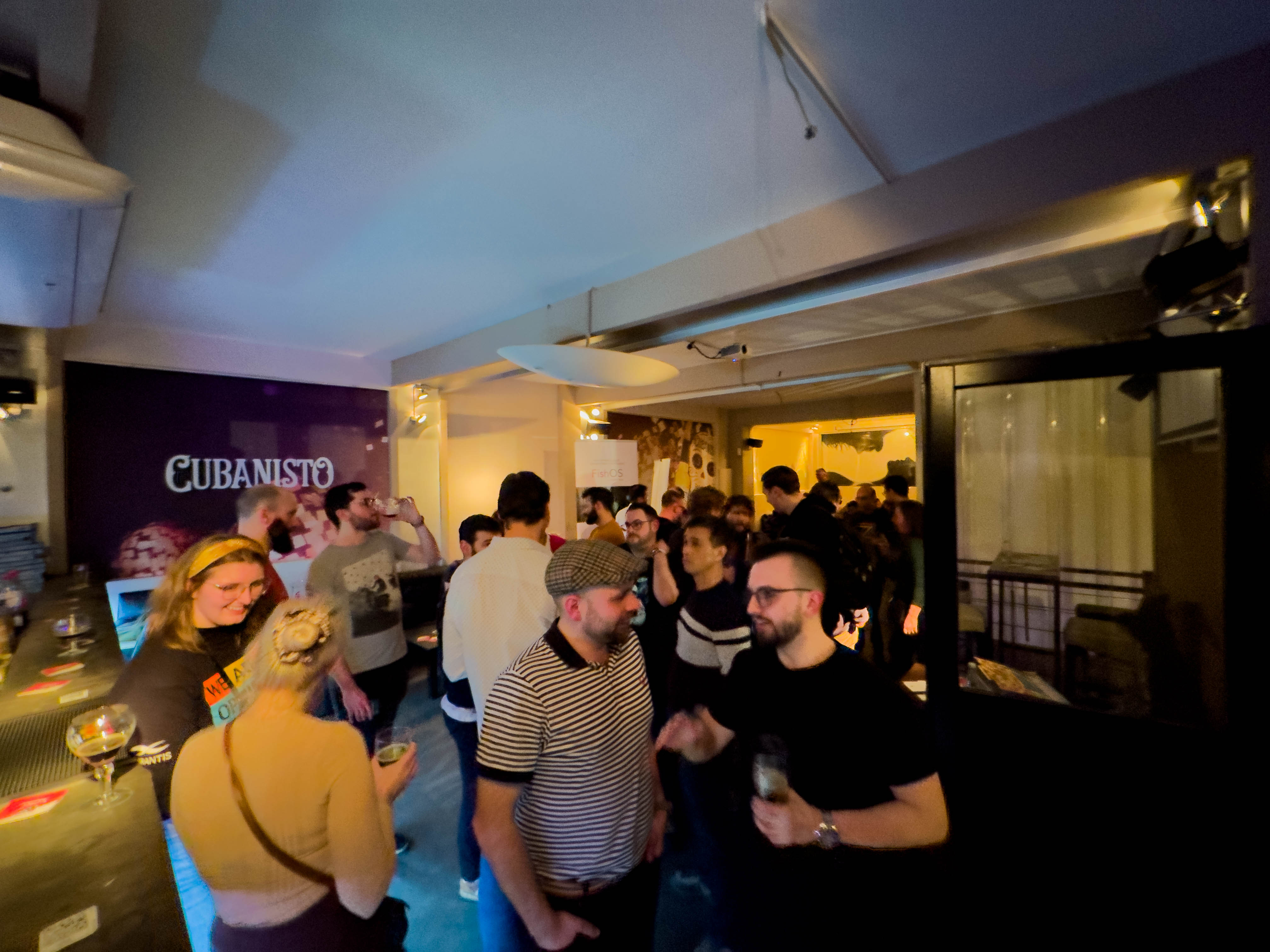
After the first day, I attended the OpenInfra Gathering in the evening, where I met several core OpenStack contributors and discussed the project's development with them. In fact, the primary goal of attending open-source conferences like this isn't just the sessions, but rather networking and having discussions with other contributors.
Booths
Like COSCUP, FOSDEM features many booths related to open-source software. However, unlike conferences in Taiwan that often organize 'stamp rally' activities to encourage booth visits, FOSDEM has no such mechanism. Most visitors to the booths are there because they genuinely want to learn more or are already interested in those specific fields.
Since I wasn't particularly interested in the booth content, I spent most of my time hopping between different sessions.
Conclusion
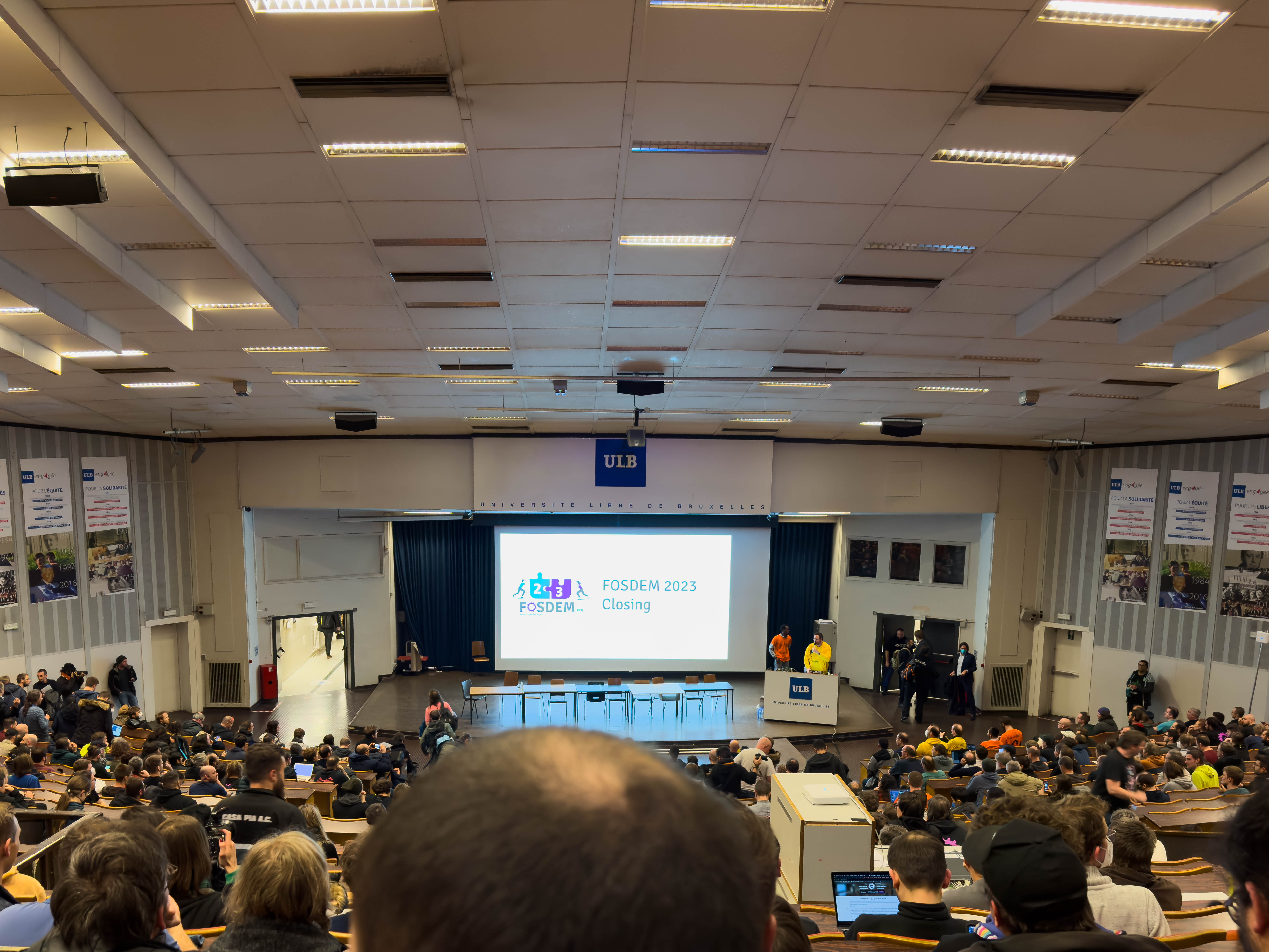
If you've attended COSCUP in Taiwan, FOSDEM will feel quite familiar. Personally, I find the overall atmosphere and content of the two conferences to be very similar. Europe is home to many open-source contributors; if you want to meet European contributors to your own projects, FOSDEM is a great opportunity. Furthermore, compared to Asia, there is a much higher level of discussion regarding human rights and privacy in Europe. I highly recommend FOSDEM to anyone interested in these topics.
Copyright Notice: All articles on this blog are licensed under CC BY-NC-SA 4.0 unless otherwise specified.

